/about
Run software by talking to it. And see every step first.
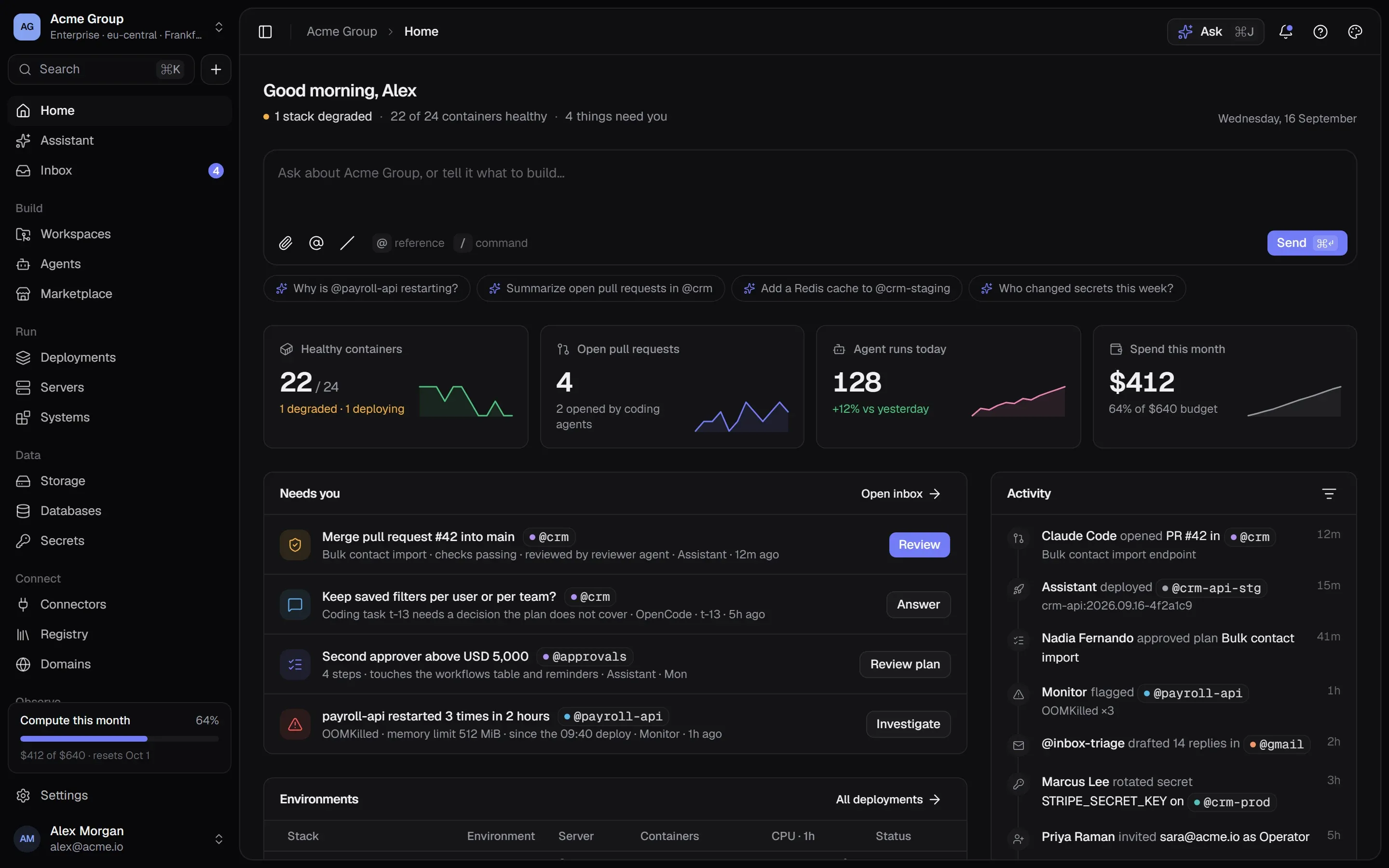
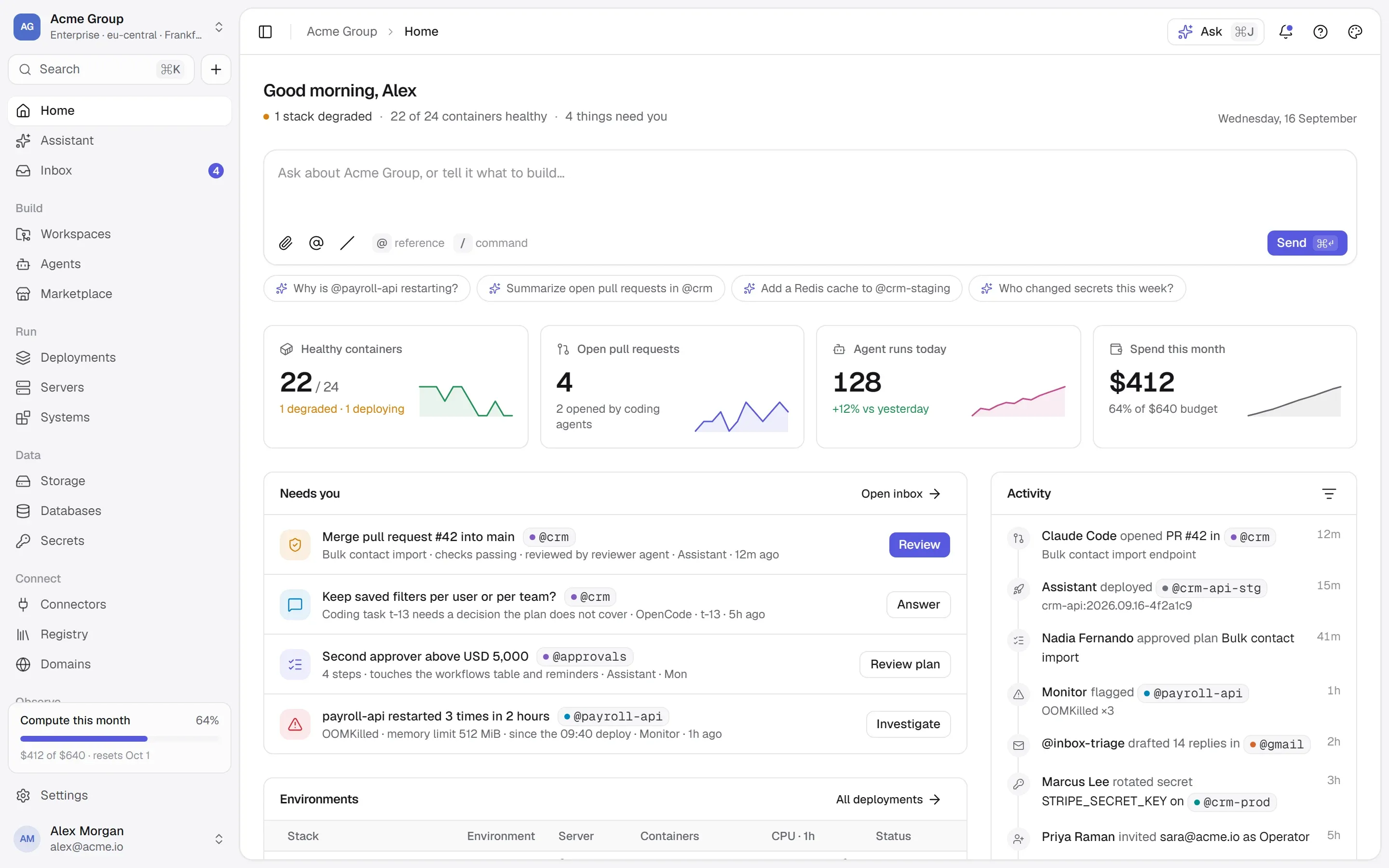
TalkingSuites is one place to build, deploy and run your software — in an isolated cloud of your own, where every system it runs can be operated by conversation. This page is why it exists, and the rules it is built by.
/why
Too many places for one product.
Running one product today means a code host, a cloud console, a database service, a secrets manager, a log tool and a billing page — each with its own words for the same things. When something breaks, you translate between them, and the answer is in the one you did not open.
And once a product is built, using it means learning its screens. A CRM has an admin panel; so does the payroll service, and the reporting job, and the next one. Asking one question across them means five logins.
So we are building one place for all of it: an isolated cloud per organization, where every system publishes an interface a person or an agent can talk to — and where nothing irreversible happens without you.
/idea
One place, arranged the way it runs.
The product is laid out the way the idea was drawn. Each part has its own page.
Workspaces
Your code as a product, not a repository: every project that ships together, read live from GitHub, with its environments.
Deployments
Each project becomes a container; containers land in stacks on private networks, with the databases they need beside them.
Marketplace
Ready-made apps and databases that become ordinary stacks you own — plus Docker Hub and the MCP registry, searched live.
Systems
The interface a product publishes — an MCP server — so it can be asked things and told to do things, with every call recorded.
The assistant
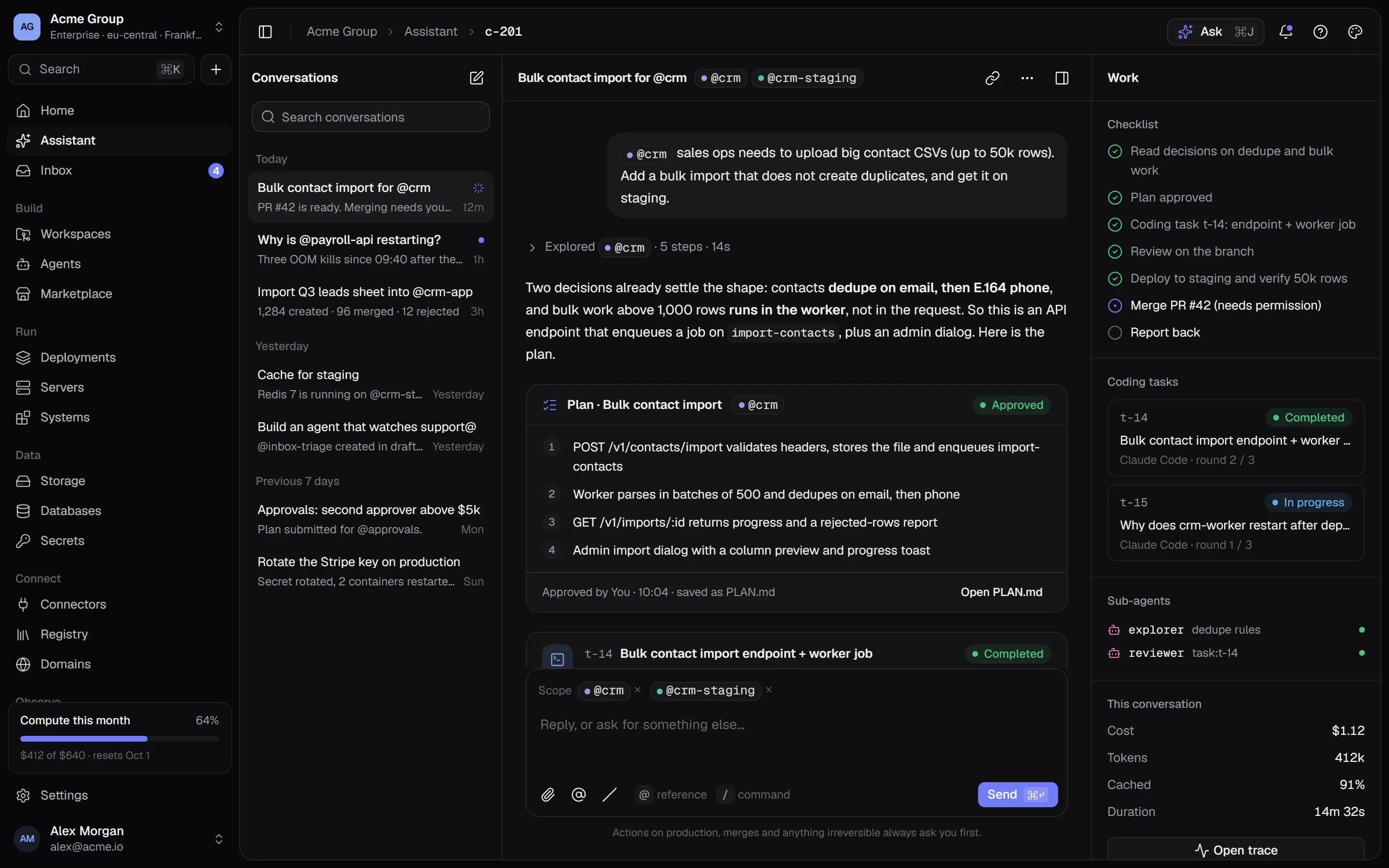
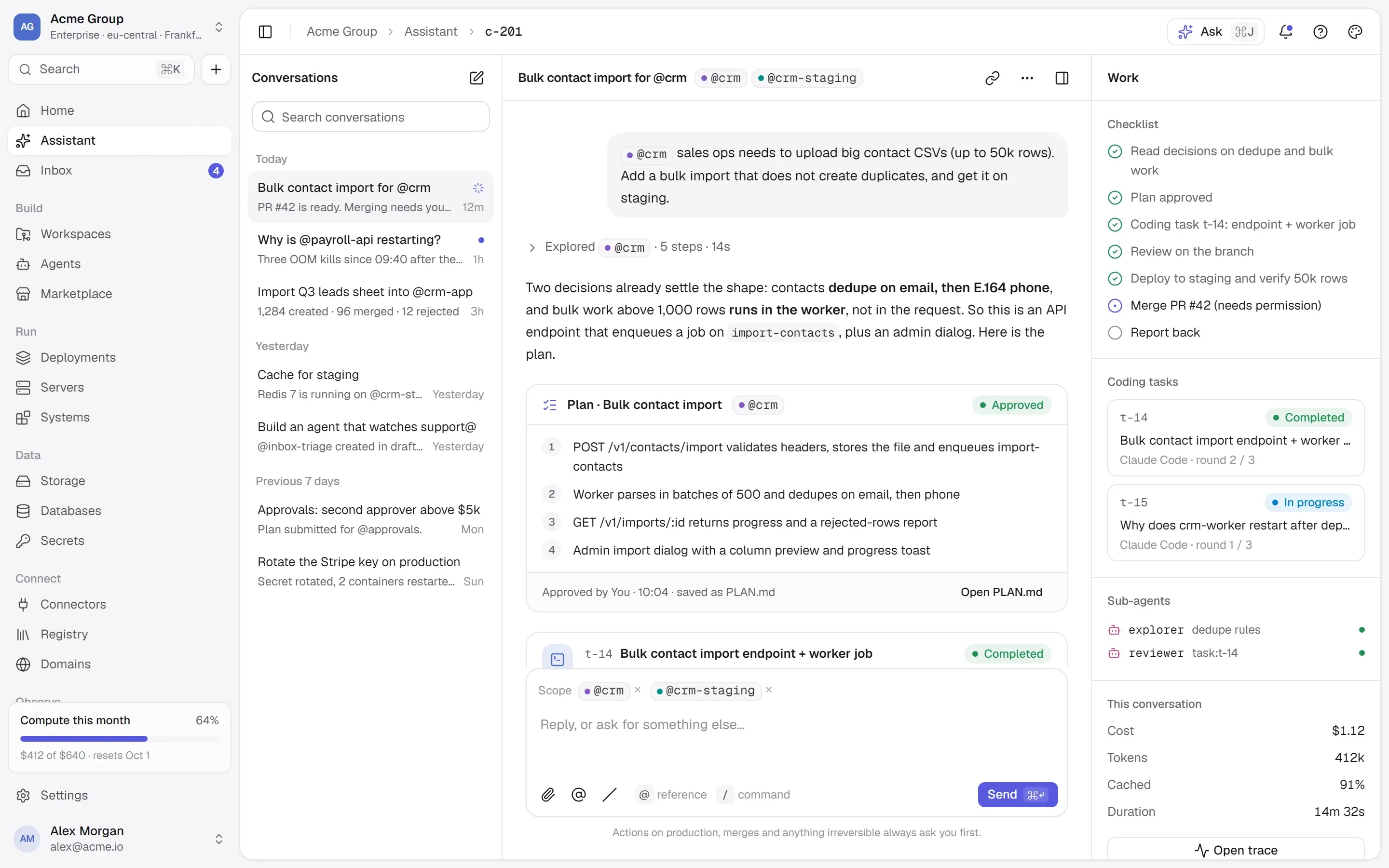
One address bar for all of it: ask, and it answers, operates something running, or writes a plan for you to approve.
Agents
Built from Markdown and a set of grants: what each may read, change and call, and what wakes it.
/principles
The rules we build by. Mechanisms, not slogans.
Show it before it runs
Every create, install, deploy and rollback opens a review with the exact commands it will run, and nothing starts until someone approves it.
Always a way back
The old container keeps serving until the new one is healthy; a restore takes a safety copy first; a disk only grows when you say so, because that cannot be undone.
Write it down first
Every change lands in the audit log and every tool call in a ledger. A call that costs money is recorded before it is made.
Charge for what ran
Servers by the hour and never more than the monthly price; storage by each day’s peak; downloads free; no price per seat.
Yours, not shared
An organization is its own isolated cloud — machines, networks, buckets and secrets. Backups go into buckets you own.
You own what you install
Whatever comes from the Marketplace becomes an ordinary stack you can open and change, not a hosted service you rent.
Agents ask; people decide
A tool that changes data asks first; one that destroys it wants its name typed back — and every call is written down.
No invented proof
No logos of customers we don’t have, no quotes nobody said, no numbers we can’t back. What you read here is the product.
/around-the-core
And around it. The rest of the platform.
Your own domains, the tools you already use, sandboxes for coding work — and the assistant and agents that tie it together.
Domains and certificates
A service at app.example.com instead of an address and a port, with certificates that renew themselves.
Connectors
The tools you already use, joining the Registry beside the tools of your own systems.
Sandboxes
Coding work that runs in a sandbox of its own, started from your workspace with only the secrets it was given.
The assistant and agents
Plans before work, one question with a default when it needs you — and agents you build from Markdown and grants.
/start
See it for yourself.
Request early access — no platform fee, no price per seat. You pay for what runs, by the hour.